
Effectia analyses demand for research and innovation talent at Transfiere 2024
21 de February de 2024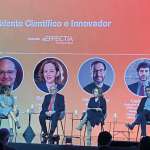
Transfiere Forum round table highlights the challenge of attracting and developing research and innovation talent for public administrations and companies
22 de March de 2024Effectia analyses demand for research and innovation talent at Transfiere 2024
21 de February de 2024Transfiere Forum round table highlights the challenge of attracting and developing research and innovation talent for public administrations and companies
22 de March de 2024Analysis, Communication, Health and healthcare transformation, Technology transfer
· 8 de March de 2024
Sagrario Mochales, the woman who discovered Spain’s first antibiotic
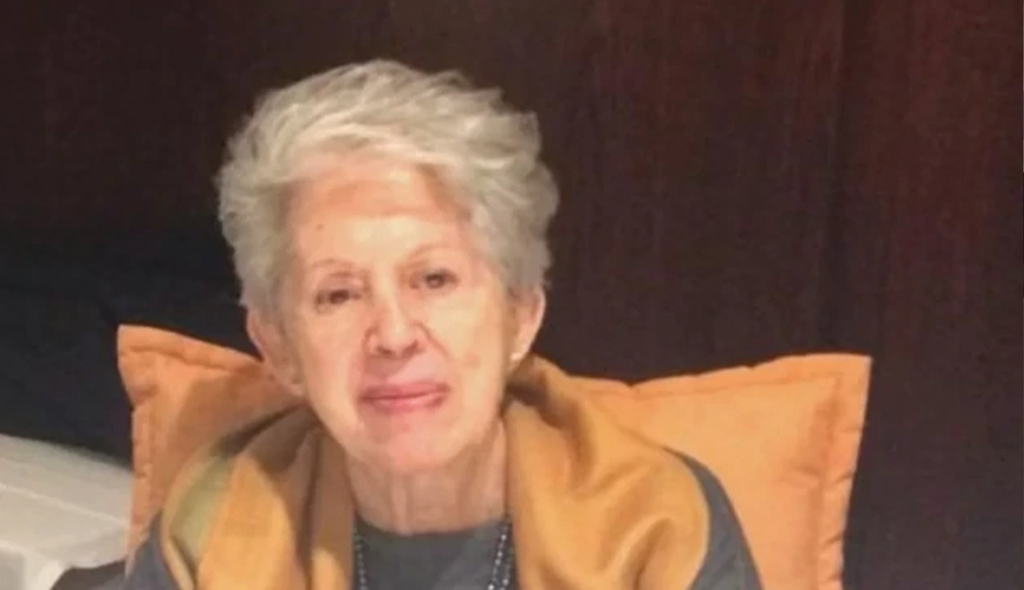
Sagrario Mochales
If Sagrario Mochales had not been so observant, if she had not loved her work enough to decide one day to stay until her culture “spoke”, if chance had not been on her side, if…, if…
There are many factors that Sagrario Mochales attributes to luck, but only one explanation for the discovery of that first Spanish antibiotic: perseverance, curiosity, intelligence and a way of looking at things that enabled her to rise above convention and accept that frontier knowledge could be within her reach.
Now in her nineties, Sagrario looks back on that period of her life, which she describes as “very happy”, when she helped discover and develop compounds that are now widely used medicines around the world. One of them is fosfomycin, a broad-spectrum antibiotic that marked the beginning of an extraordinary list of patents — 19 in total now bearing her name.
When do you think your vocation first emerged?
I was born in 1932. We lived near Moncloa and the war was about to begin. I was three and a half, and my parents decided that we should spend some time at the home of my uncle, Gregorio Baquero, one of Spain’s leading microbiologists at the time. He would sometimes take us to the laboratory, and I loved looking at everything there, especially a device that seemed incredibly strange to me and was nothing more than a microscope. I think that stayed with me. My admiration for my uncle led me towards science, and I think I made the right choice. Had it not been for that chance circumstance, I might well have studied philology or something similar. I knew I would never have to give up the pleasure of reading, whereas if I did not study something scientific, it would create a barrier to continuing to expand my knowledge in those areas.
How do you go from studying Biology to working at the frontiers of science?
I think I was lucky enough to receive a three-year scholarship worth one thousand pesetas a month to begin working on an innovative programme for the Spanish Penicillin and Antibiotics Company (CEPA), which was focused on discovering antibiotics. At the time, I thought it was the best thing that could happen to me in life, and when I retired I still thought the same.
What was your work like there?
CEPA had an agreement with the American pharmaceutical company MERCK. We were responsible for the first part of the programme, which involved finding new elements in nature with antimicrobial activity, while they handled the second part: testing whether those elements could lead to medicines. When I started, we jokingly called ourselves “the lowest rank of the scholarship holders”, but the truth is that we found the programme fascinating because it brought us into contact with things that even the people leading the research did not yet know about. That created a special sense of challenge and excitement, because we were discovering properties and elements that had never been recorded and you did not know what the final outcome of your research would be. There was a programme to follow, but the results were unknown to everyone, including the people ultimately responsible for the research, and I found that enormously interesting throughout my life.
We were doing work that was not very well understood and was not considered particularly scientific. It was only with the first discoveries that the importance of our research, and its significance for science, began to be recognised.
In 1989 you were appointed director of CIBE (Centro de Investigación Básica España). What was your experience of being responsible for the laboratory? Did you experience the impostor syndrome that many women talk about today?
No, I never had that feeling. I have always been an observant woman, able to recognise intelligence in others and try to learn from it. I think I naturally had a capacity for management and persuasion, trying to get potential funders and decision-makers interested in what we were doing. My aim was to secure better technical and financial resources so that we could carry out more ambitious research. I do not think being a woman was ever a problem when working in a competitive environment, surrounded by many people and managing the laboratory and the team with authority. If I had difficulties, I endured them. I had a strong ability not to dramatise things, which I still use in life. I have had difficult moments, like everyone, but I have tried not to let them overwhelm me.
Today, the highest rates of women leaving science occur between the ages of 30 and 40 because of the difficulty of securing stable positions and combining frontier science with family life. Did you face similar dilemmas during your career?
There were not many women at the time and, obviously, it was unusual for me to hold positions of responsibility. Even so, I remember it as the best period of my life. Separately, they were two perfect lives: on one hand, my husband and my son, and on the other, a job in which I was very happy. But combining the two was extremely difficult. Work-life balance was hard and you depended on other people. At home, I left at half past seven and returned at half past four, leaving my husband with the baby. We had people who helped us, but it was a responsibility and it affected me. At work, I became known for continuing to breastfeed and bringing in the breast pump, which was something that had not been done before. But my colleagues were young and they understood. I never felt rejected for being the only woman among them. I think that, despite everything, we managed to achieve a good balance.
Looking back now, is there anything in your professional career that you are particularly proud of?
The truth is that we were not very aware of the significance of the work. We loved what we did and devoted a great deal of time to it. You have to understand that many years could pass between our isolating an element and that element being studied and developed into a viable product. So when they eventually told us, it was satisfying, but at the moment of isolation we were not very aware of what it might ultimately mean.
How do you remember the moment when you discovered fosfomycin?
As a very exciting moment. To understand it, you have to know the context. From time to time, important company researchers were sent from the United States to learn more directly about our work. On that occasion, Dr David Heindlin — who is also named on the patent — came and explained what they were looking for. Heindlin was a biologist and chemist and proposed a study on cell permeability. He came to the laboratory and I was lucky enough to show him around. I spent weeks preparing for his visit, which lasted four or five hours and during which I learned a great deal. With that information, we searched for microbes, and once we found them, we passed them on to colleagues who cultured them before finally sending them to our colleagues at Merck.
After David’s visit, I was responsible for carrying out the assay he had designed, but I could not find any active compound. On the day of the discovery, I began the assay early. It was long, laborious, very complicated and very interesting. When it was time for me to leave, at half past four, I checked the plates again and thought I could see a sign of activity, so I decided to stay and wait to see what happened. At half past six, that sign became clearly active, and I still get emotional remembering it. I immediately called the United States because, with the time difference, it was already daytime there. I spoke to Dr Heindlin and suggested growing the microorganism at a larger scale so that they could begin studying it. We observed the same activity in the new growth, freeze-dried it and sent it to the United States. This was on a Thursday and we shipped it on Tuesday morning. A few days later, they told us that the culture had three very important characteristics: first, it was a new species; second, it contained an antibiotic that had not been known before; and third, and most importantly, it was not toxic. After that, and in record time, we obtained fosfomycin.
When did you become aware of the importance of your discoveries?
The truth is that we were never considered particularly important, and I do not think I fully realised it until one day I looked through a folder I had kept and counted 19 patents. I had not been aware of how many there were. We were paid one dollar per patent and I never collected them because the administration was not worth it to me; I felt I was well paid with my salary.
Two years ago, when El País came to interview me, they told me that fosfomycin was the first Spanish antibiotic; I had never thought about it that way. I think chance played a part, and I was a good observer and noticed the activity. But we should not forget that, to achieve that result, we had selected thousands of cultures that came to nothing. I think that, just as Fleming said he did not discover penicillin but rather “stumbled upon” it, the same thing happened to me.
Is there one of your patents that has special meaning for you?
Naturally, the first one was special, but they are all important, and I felt great satisfaction whenever I was told that there was a new compound, even if I did not attach much importance to it at the time. For me, the most important thing today is how many people have been saved thanks to them and how much they have helped.
We often hear that science needs more female role models. What would you say to young people considering a career in science today?
If you have a scientific vocation, try to hold on to it for the pleasure it brings. Research is a long-distance race and you need patience and the ability to seize opportunities. Sometimes what emerges is not what you were looking for, but you have to persevere. I was very happy in my work as a researcher and very happy when I became a director. I also felt very proud because when I joined I was the only woman, and when I left more than half of the programme was being carried out by women, which seemed important to me. Bear in mind that I always selected people based on their CV, not their gender. I am talking about the 1960s.
The early days of research
When Sagrario Mochales began working, she would get on a van first thing in the morning that took her to the laboratory facilities. Almost all the passengers in that van were men, but she never regarded that as an obstacle.
She says she had no female role models during her career, but that she did not feel she needed them. Her constant references to her uncle Gregorio Baquero as a mentor and inspiration, together with her firm belief that being a woman did not mean giving anything up, made her a rara avis in Spanish research in the 1960s. Years later, one of the antibiotics discovered by Sagrario, thienamycin — the basis of imipenem — would help save the life of her uncle Gregorio.
She combined her career with her family life, and her name appeared on the patents in her own right and because the scientists who worked with her insisted that it should.
The patents
Sagrario Mochales and her team collected soil and plant samples wherever they travelled, with the aim of finding microorganisms capable of synthesising an active compound with potential therapeutic uses. In one of those collections, carried out by team member Dr Sebastián Hernández in the Alicante area, they succeeded in isolating the microorganism that produces fosfomycin. Today, fosfomycin remains one of the most widely used antibiotics for a range of infections, including urinary tract infections, and the discovery was published in Science in 1969.
Further discoveries followed during the 1970s, including lovastatin, a member of the statin family used to treat high cholesterol. Throughout those years and until her retirement, Sagrario Mochales’s sharp and attentive eye continued to help save lives.